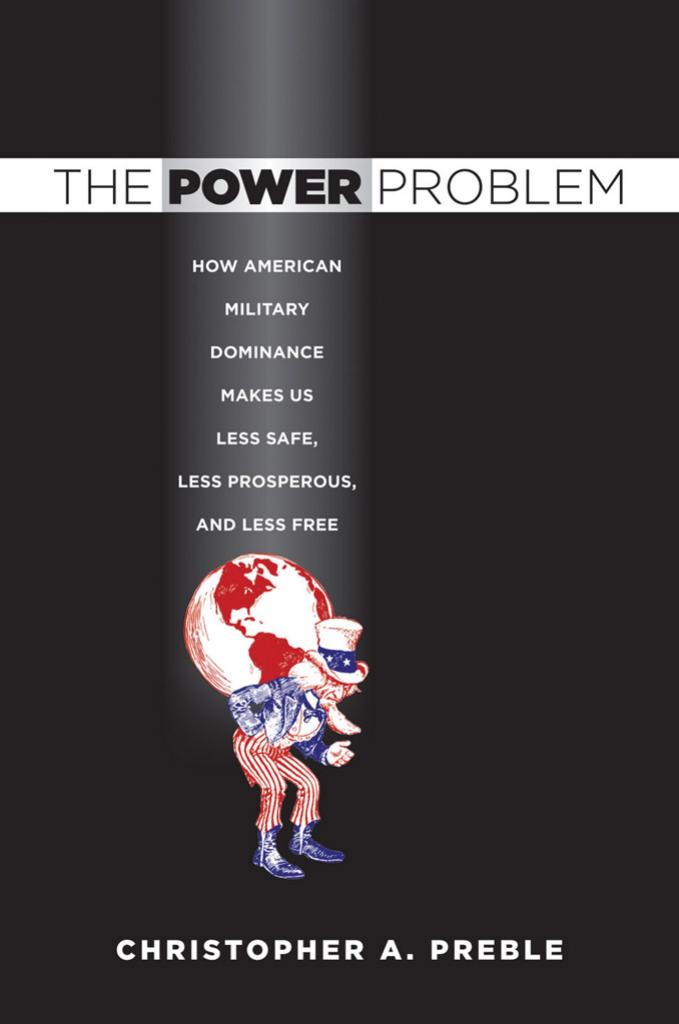
The Power Problem: How American Military Dominance Makes Us Less Safe, Less Prosperous, and Less Free by Christopher A. Preble
Author:Christopher A. Preble [Preble, Christopher A.]
Language: eng
Format: epub, pdf
Tags: Politics, Political Science, Security (National & International)
ISBN: 9780801457913
Google: mqvOremmrZMC
Goodreads: 6082184
Publisher: Cornell University Press
Published: 2009-04-15T00:00:00+00:00
The Mother of All Public Goods Fallacies: Oil
Of all the public goods rationales offered in defense of the U.S. militaryâs global posture, none is more important than the presumption that the U.S. military must ensure access to the worldâs energy resourcesâespecially that most important resource, oil, from that most volatile region, the Persian Gulf. Even those who are willing to concede that the patterns of international trade, which seemed tenuous in the years immediately following World War II, or during the tense years of the Cold War, might no longer depend on the active protections of the U.S. military, make exceptions in the case of oil.63
It is obviousâpainfully so for U.S. consumers who in early 2008 saw the inflation-adjusted price of a gallon of gasoline nearly double over a five-year period64âthat the flow of oil is essential to the functioning of the U.S. economy. But the claim that Americans and the rest of the world benefit from, indeed is dependent on, a U.S. military presence in the Middle East to guarantee the flow of oil and natural gas from the region does not withstand close scrutiny. In this section, I explain why many of the fears of disruptions in the flow of oil are grounded in fundamental misconceptions about the way that global energy markets operate.
The U.S. military presence in the Persian Gulf is largely irrelevantâand may well be counterproductiveâto ensuring reliable access to energy. Further, to the extent that U.S. policies are usefulâin other words, to the extent that the U.S. military posture in the region constitutes a public goodâthey run afoul of the same problems associated with public goods as discussed in this chapter, especially free riding. The free riders include energy consumers in Europe and Asia, but especially the regimes sitting atop the vast oil reserves in the region whose very survival depends on their ability to get their product to market. If the public goods argument that is associated with ensuring the flow of oil can be shown to be critically flawed, then we must also question other policies ostensibly geared toward keeping the international economy open for business.
Unpacking all of the faulty justifications that have given rise to a permanent U.S. military presence in the Middle East would be a long and arduous process and is well beyond the scope of this work. The problem begins with a basic misunderstanding of energy markets. For starters, for all the talk of U.S. âdependenceâ on foreign oil, the United States is less dependent on foreign sources of oil than are many other countries.65 Not that that means anything. Oil is traded globally, therefore the point of originâbe it foreign or domestic, Nigerian or Norwegianâis essentially irrelevant. Our cars donât care where the oil comes from any more than they care what port it was received in or where it was refined into gasoline.
It is a grave error, therefore, to exaggerate the strategic and economic significance of Persian Gulf oil for U.S. consumers.66 Although Saudi Arabia is the
Download
The Power Problem: How American Military Dominance Makes Us Less Safe, Less Prosperous, and Less Free by Christopher A. Preble.pdf
This site does not store any files on its server. We only index and link to content provided by other sites. Please contact the content providers to delete copyright contents if any and email us, we'll remove relevant links or contents immediately.
Personalized inhaled bacteriophage therapy for treatment of multidrug-resistant Pseudomonas aeruginosa in cystic fibrosis by unknow(215547)
CONSORT 2025 statement: updated guideline for reporting randomized trials by unknow(102524)
Critical evaluation of the ProfiLER-02 study design and outcomes by Vivek Subbiah & Razelle Kurzrock(102052)
Cardiac gene therapy makes a comeback by Oliver J. Müller & Susanne Hille & Anca Kliesow Remes(101840)
Whisky: Malt Whiskies of Scotland (Collins Little Books) by dominic roskrow(74629)
Unveiling the design rules for tunable emission in graphene quantum dots: A high-throughput TDDFT and machine learning perspective by Şener Özönder & Mustafa Coşkun Özdemir & Caner Ünlü(51004)
A yeast-based oral therapeutic delivers immune checkpoint inhibitors to reduce intestinal tumor burden by unknow(40376)
Covalent hitchhikers guide proteins to the nucleus by Alexander F. Russell & Madeline F. Currie & Champak Chatterjee(40298)
Meet the Authors: Christopher R. Mansfield and Emily R. Derbyshire by Christopher R. Mansfield & Emily R. Derbyshire(40211)
Alkaline-earth metals promote propane dehydrogenation with carbon dioxide through geometric effects: Altering the reaction pathway by unknow(32817)
Induced iron vacancies boosting FeOOH loaded on sustainable Fenton-like collagen fiber membrane for efficient removal of emerging contaminants by unknow(32613)
Efficient electric-field-assisted photochemical conversion of methane to n-propanol exclusively over penetrated TiO2Ti hollow fibers by Guanghui Feng(32533)
Bi2SiO5 nanosheets as piezo-photocatalyst for efficient degradation of 2,4-Dichlorophenol by Hangyu Shi & Yifu Li & Lishan Zhang & Guoguan Liu & Qian Zhang & Xuan Ru & Shan Zhong(32471)
A novel NDIPTA organic heterojunction photocatalyst with built-in electric field for efficient hydrogen production by Jiahui Yang & Baojun Ma & Yongfa Zhu(32445)
Enhanced conversion of methane to liquid-phase oxygenates via hollow ferrite nanotube@horseradish peroxidase based photoenzymatic catalysis by Jun Duan & Shiying Fan & Xinyong Li & Shaomin Liu(32407)
Ordered macroporous superstructure of defective carbon adorned with tiny cobalt sulfide for selective electrocatalytic hydrogenation of cinnamaldehyde by Xiao-Shi Yuan & Sheng-Hua Zhou & San-Mei Wang & Wenbo Wei & Xiaofang Li & Xin-Tao Wu & Qi-Long Zhu(32336)
What's Done in Darkness by Kayla Perrin(27264)
Topological analysis of non-conjugated ethylene oxide cored dendrimers decorated with tetraphenylethylene: Insights from degree-based descriptors using the polynomial approach by A Theertha Nair & D Antony Xavier & Annmaria Baby & S Akhila(26634)
Investigation of mechanical and self-healing properties of hydroxyl-terminated polybutadiene functionalized with 2-ureido-4-pyrimidinone by Mohsen Kazazi & Mehran Hayaty & Ali Mousaviazar(26557)
